FastReport VCL: How 25 Years of Innovation Changed the Approach to Reporting in VCL Applications
FastReport VCL is a report generation tool that has become an essential part of developers' arsenal on the Delphi platform over more than a quarter of a century. Since its inception in the late 1990s, the product has evolved from a simple template designer into a comprehensive system that supports interactive elements, vector graphics, and integration with modern IDEs. We decided to take a look back to demonstrate how reporting technologies have changed and to trace the key stages of the product's development in each version.
FastReport VCL has come a long way from a basic report generator to a versatile tool for modern applications.
The Birth of the Idea for the Future Product
The need to create a custom reporting component arose in 1997 during the development of a payroll accounting system. The specificity of such a system involves a large number of reporting forms and the need for easy customization of their appearance. Existing reporting systems did not possess the necessary features, so the decision was made to develop a proprietary report generator.
In the very first version of the generator, only one band was used—the data row, which allowed for the creation of multi-level reports. Later, in 1998, the report generator was formalized as a component (initially it was just a set of plug-in modules). From this point on, the product was named "FastReport" and began to rapidly expand its functionality.
The First Version and Customer Recognition
The first release of the product for Delphi 2–3 consisted of a basic report designer with standard support for data sources and printing functionality. It immediately allowed the creation of reports from code. It supported programmatically generating reports without a designer, followed by integration into Delphi applications. FastReport VCL boasted high performance and a small code footprint (less than 1 MB), which was a key advantage for Delphi developers in the late 1990s.
Since its inception, FastReport VCL has become the flagship product in the entire lineup and received significant recognition among our customers. By 2001, the product ranked second in a survey of the most popular report generators among Delphi developers (Delphi Magazine). The second version followed, expanding export capabilities and compatibility.
FastReport VCL 2.0: A Technological Leap in Development
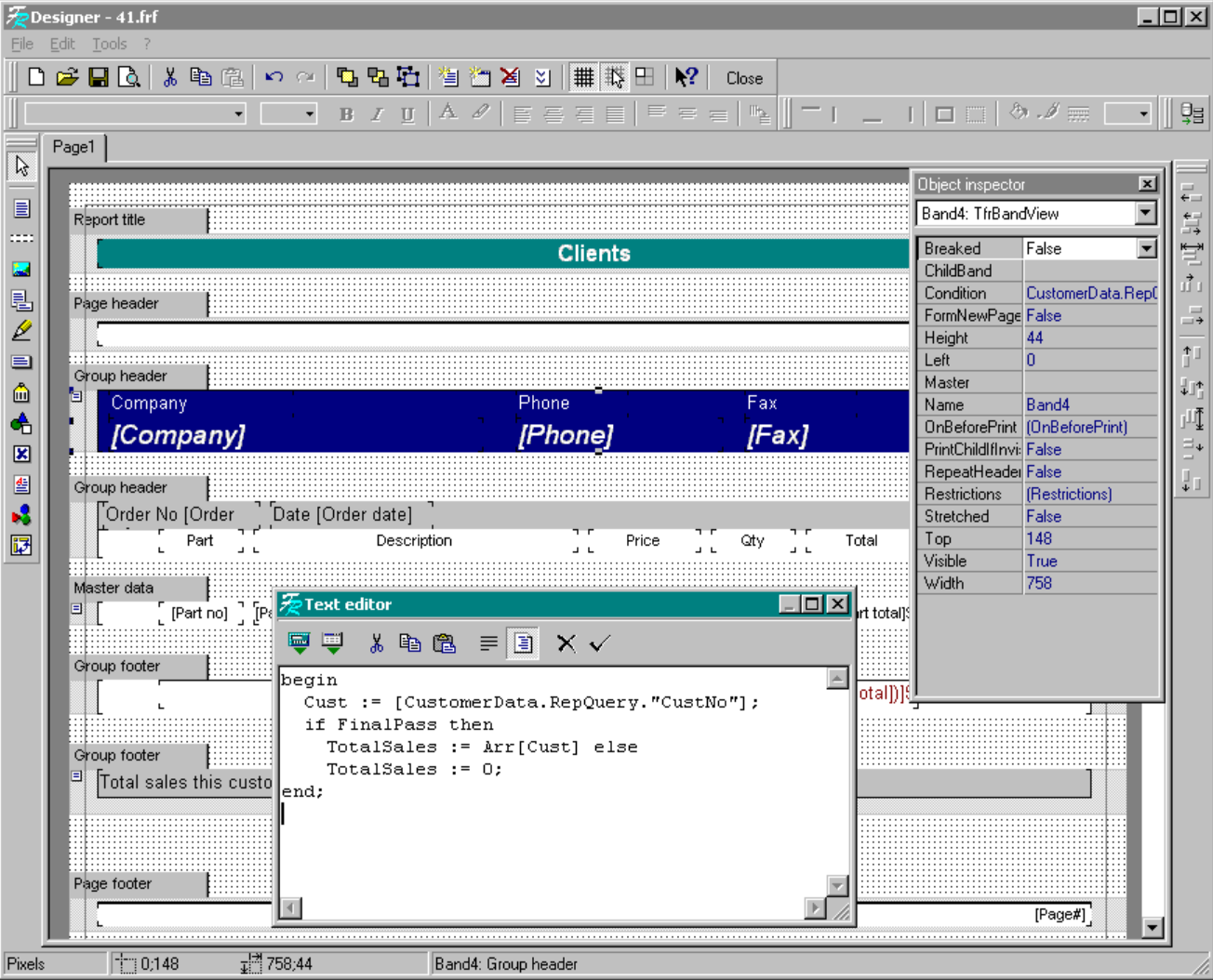
The second version of FastReport VCL brought significant improvements in development support. Among these were integration with C++Builder 6, CLX, and Kylix, as well as enhancements to CrossTab reports.
Update 2.5 introduced important features:
- Export to XLS format via OLE;
- Export to image formats: BMP, JPEG, and TIFF (both color and black-and-white options);
- Beta version of RTF support;
- Programmatic page editing before printing.
Additionally, basic report scripts were introduced in the form of event handlers for objects, improvements to CrossTab functionality, and the option to disable syntax highlighting. Later, version 2.3 of FastReport VCL became free under the new name FreeReport and served as the foundation for LazReport.
The entire product line received recognition from the community. FastReport VCL won the "Delphi Product of 2002" award as the best report generator and ranked second in the "Delphi Informant Magazine" survey, receiving 20% of the votes. This underscored the contribution of our products to the advancement of reporting tools.
In the third version, the focus shifted to expanding report capabilities, improving printing functionality, and integrating with other components, including databases.
Expansion of Components and Export Options in FastReport VCL 3
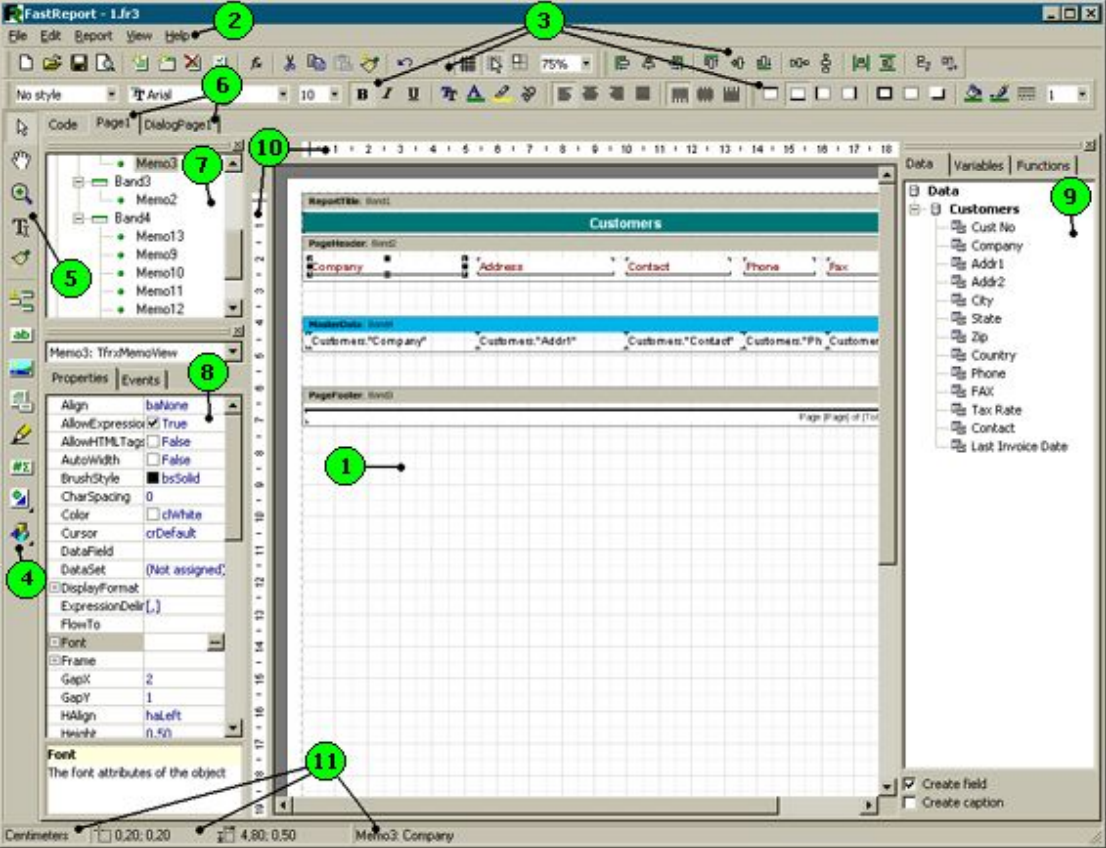
FastReport VCL 3 is an updated product with a new architecture. The report format is now XML, and Unicode support allows the product to be used worldwide. FastReport VCL 3 became so extensive that it included several different component sets. It was from this version that the fully functional scripting engine, FastScript, emerged, featuring debugging capabilities for reports and support for four scripting languages, along with the SQL query builder, FastQueryBuilder.
The report designer became more user-friendly. It introduced features like scaling, a report grid, support for nested properties in the object inspector, and much more.
The most notable and significant changes in FastReport VCL 3 included:
- The introduction of internal data sources;
- Fully functional report dialog forms;
- Addition of support for TeeChart Pro;
- Expanded export options to PDF, HTML, and RTF;
- New components for creating a fully functional WEB reporting server, with all the features of the product.
These updates and new server capabilities made FastReport a powerful tool for the rapid generation of complex documents. Some reports from this version can also be opened in modern versions of FastReport.
FastReport VCL 4: Flexibility, Performance, and a New Era of Report Debugging
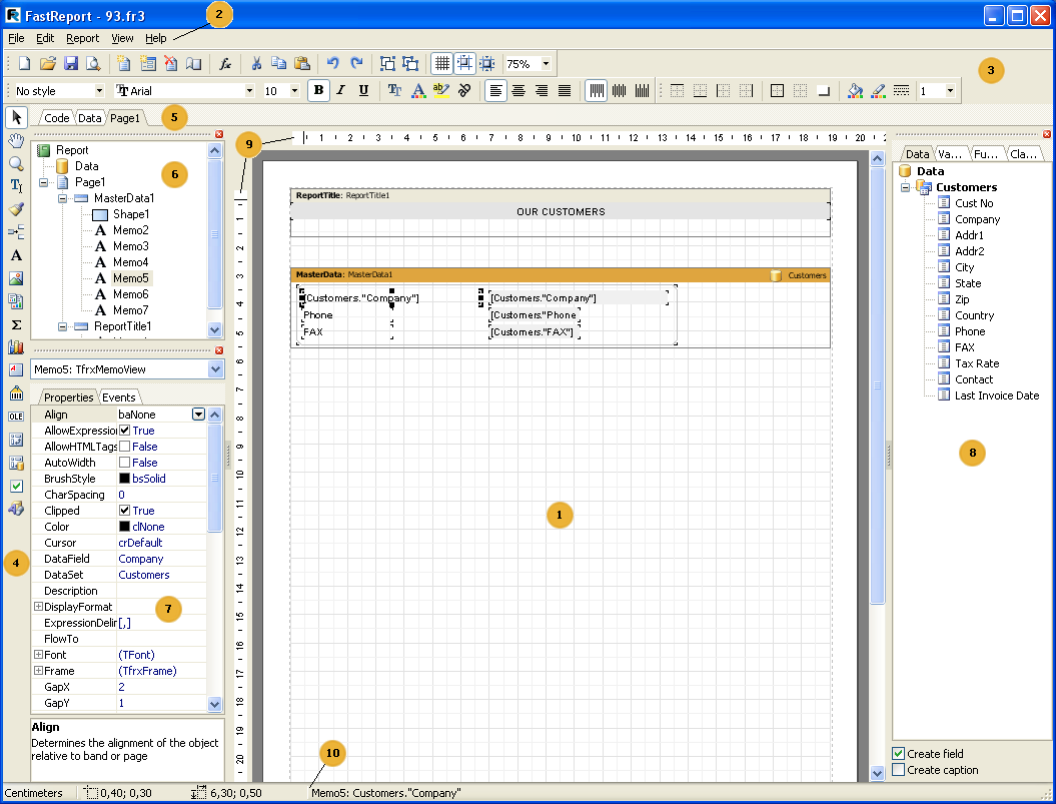
The release of FastReport VCL 4 was a logical continuation of the previous version. The product received a full debugging environment, support for report inheritance, and formats such as ODF, ODT, and XLS. The new version improved compatibility with the latest versions of RAD Studio and added support for FireDAC components. Printing on dot matrix printers and exporting to PDF were also significantly enhanced.
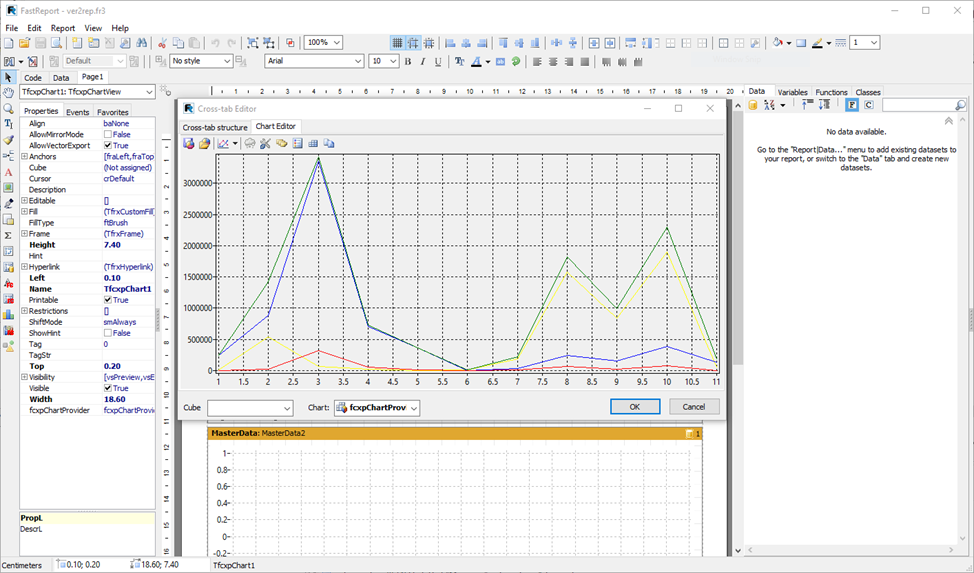
During this period, new components for OLAP solutions were integrated into FastReport. These innovations made the product incredibly flexible and high-performing. User convenience continued to evolve as well. A dedicated page for internal data sources was introduced, allowing for the creation of flowcharts. Cross-tab functionality was expanded, a side-by-side printing mode was added, and the ability to use objects within cells was implemented.
Debugging reports became much more convenient with the introduction of the Watches window and breakpoints. To facilitate the transition from other report generators, converters from QuickReport, ReportBuilder, and RaveReports were added.
The report engine gained support for inheritance. This version laid the foundation for separate products, FastReport FMX and FastReport for Lazarus. The latest updates provided full support for Unicode development environments and x64 platforms.
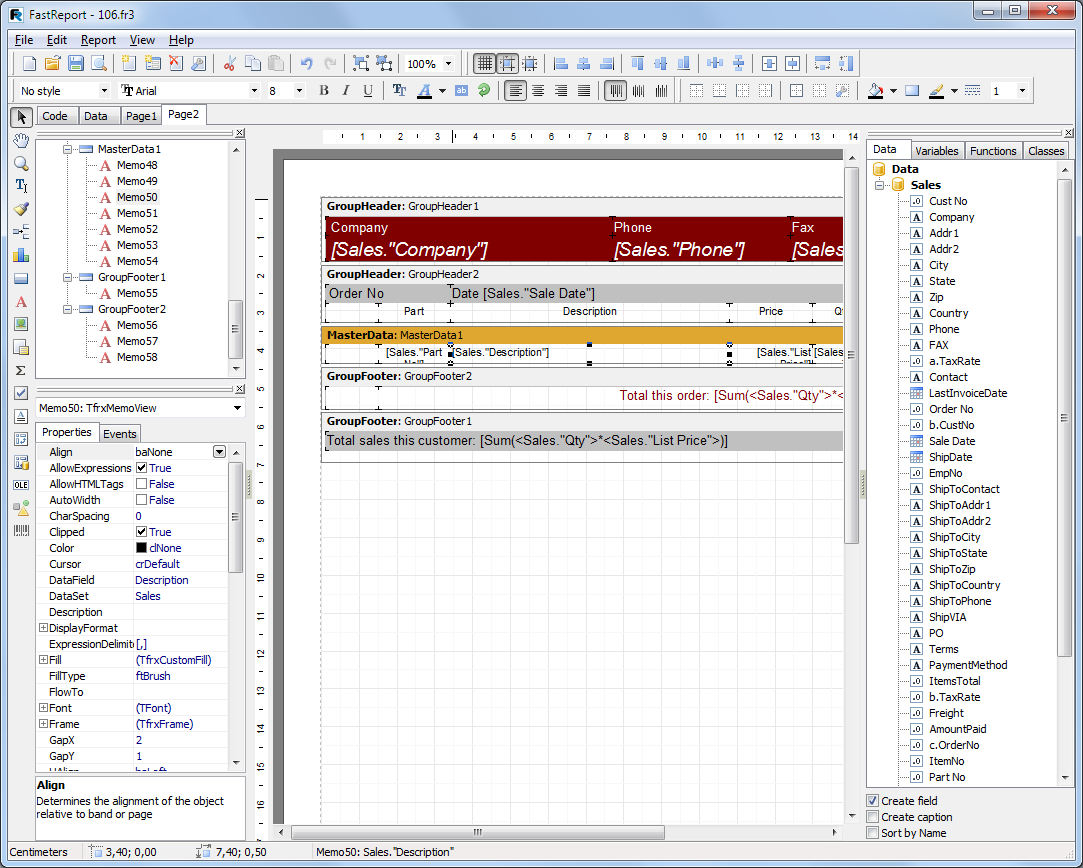
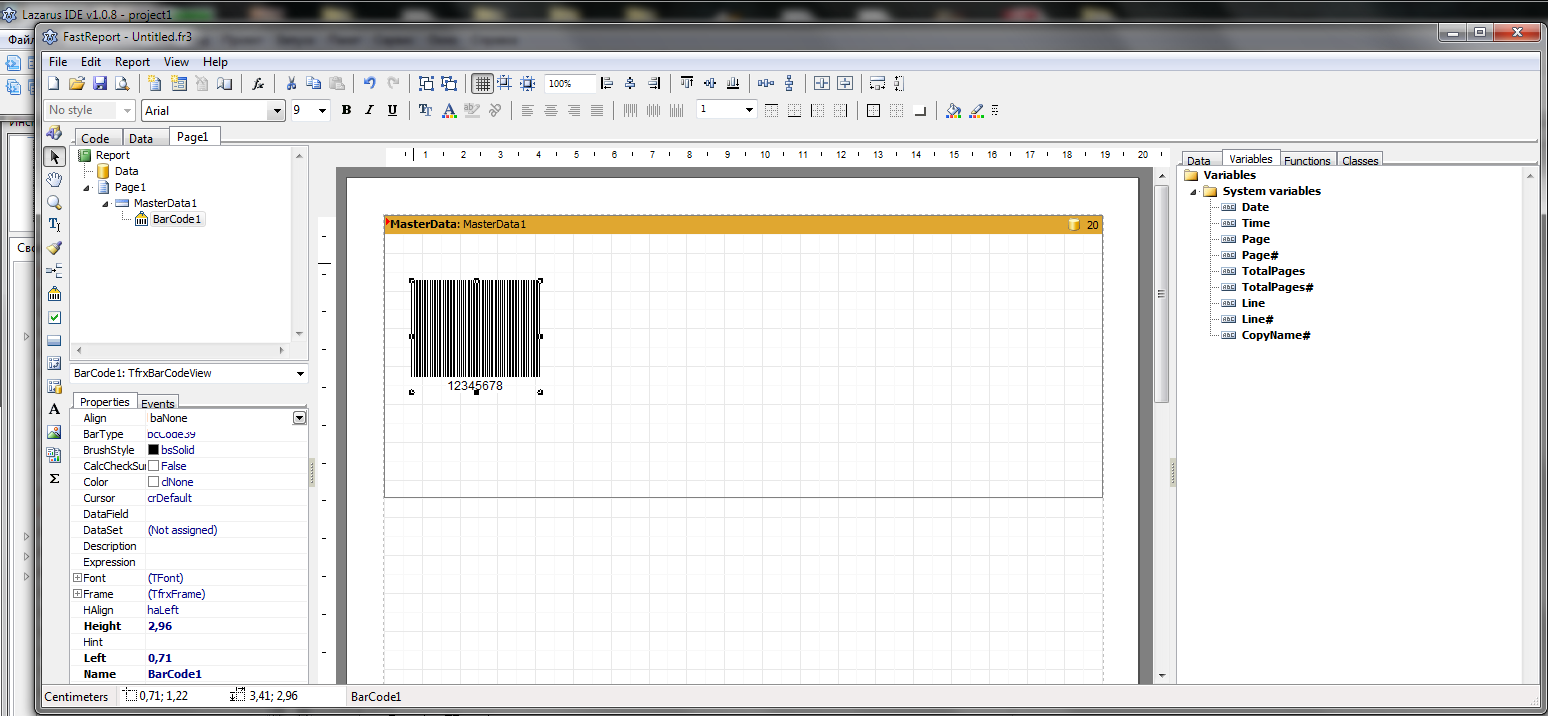
From QR Codes to DOCX: How FastReport VCL 5 Became More Powerful and User-Friendly
With the release of the fifth version of FastReport VCL, the product became even more interactive. The preview window introduced the ability to open tabs with different reports, and "detailed reports" were added, allowing users to open a breakdown from the main report in a new tab.
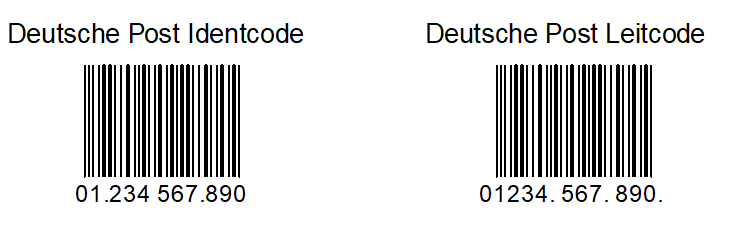
The report object set was expanded to include 2D barcodes (QR, DataMatrix, PDF417), linear barcodes with auto-encoding such as Code128 (GS1), EAN128, and native integration with FireDAC. Export filters now support file formats like DOCX, XLSX, HTML5, and PPTX, as well as improvements in existing formats, including support for PDF/A.
The client-server components received a significant interface update. FastReport for Lazarus was also updated and gained support for the capabilities of FastReport VCL 5. Optimizations for printing on dot matrix printers and a refreshed interface design made version 5 the most flexible tool for Delphi, capable of creating complex analytical reports. These innovations reduced the size of PDF files and sped up the performance of server components, providing high efficiency for any business tasks.
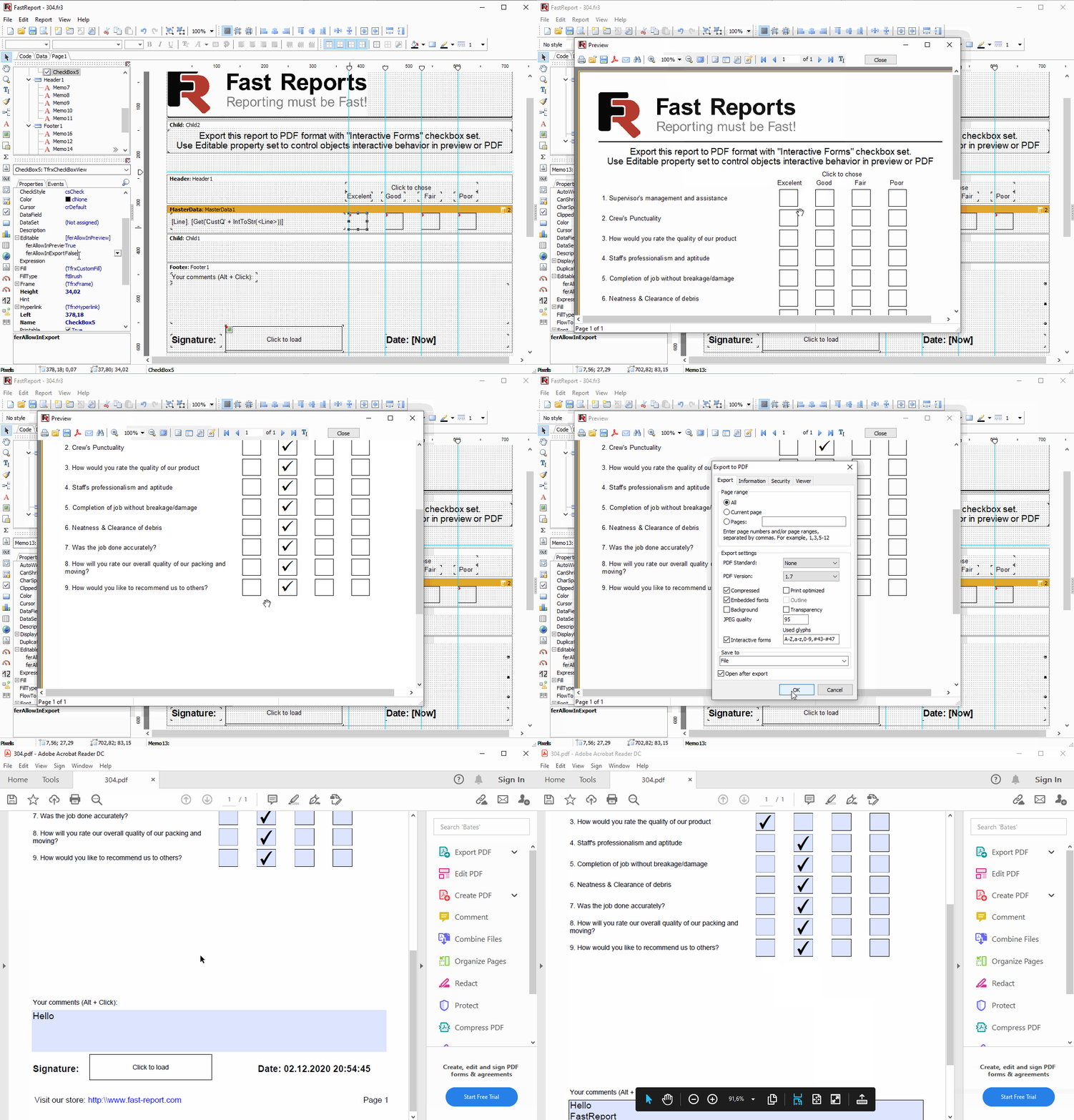
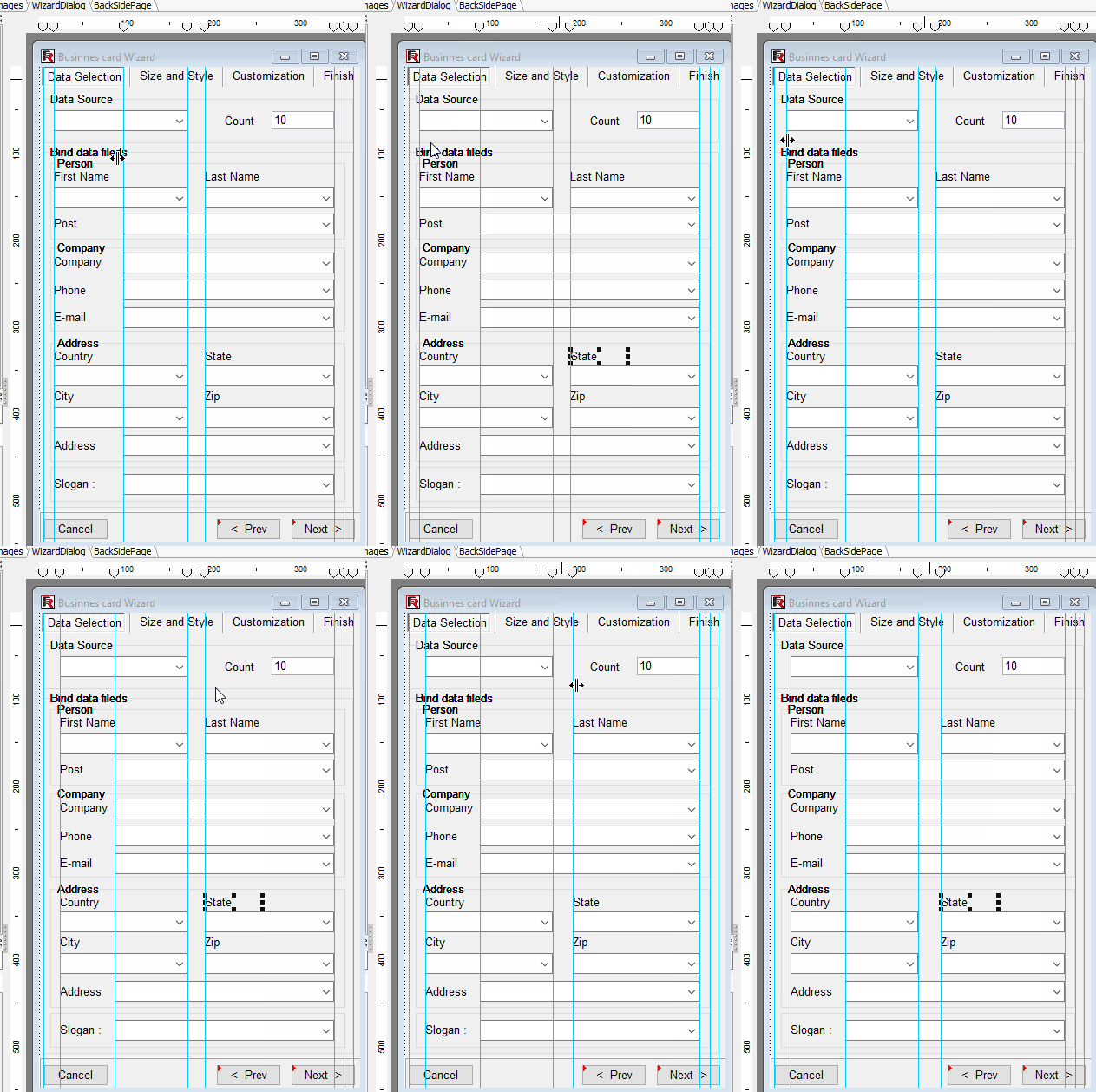
FastReport VCL 6—Not Just Reports, but Interactive Analytics in RAD Studio 10.4
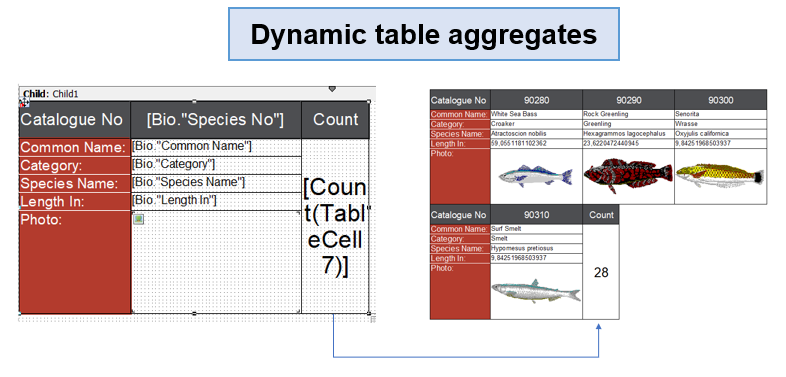
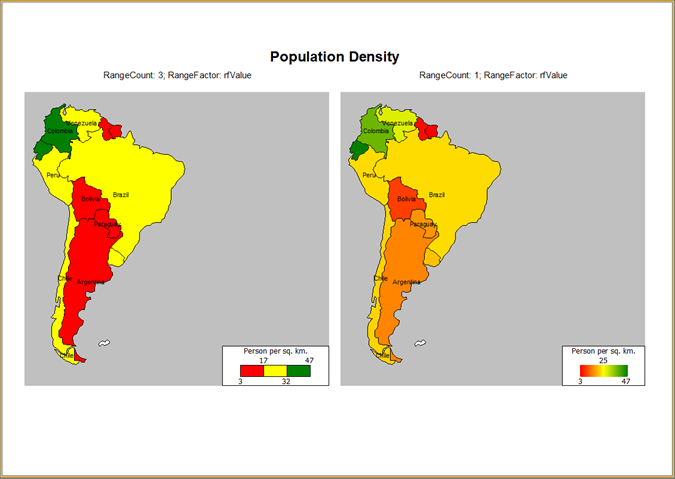
The sixth generation of FastReport VCL ushered in a new era of interactive reports. Users were able to edit elements directly in the preview window using built-in editors. This version introduced new report objects: maps that support loading geospatial data from databases (OSM, ESRI), tables with a dynamic table builder for complex reports, a "CellularText" component, "Gauges" for report forms and dialogs, as well as "PageControl" for dialog forms.
The release significantly expanded functionality through integration with cloud storage services (Dropbox, Google Drive, OneDrive, Box). Users can now save and load reports and exports to these services. Export filters received support for new formats, including PostScript, ZPL, and PPML. Special attention was given to WYSIWYG export and vector formats, including PDF with support for interactive forms and SVG.
The report engine gained new features, such as an object offset and stretching mechanism, deferred expression processing, and mirroring elements on the page. The SQL editor introduced syntax configuration. Additionally, a pool of deferred commands was added, allowing reports to rebuild themselves from scripts.
These enhancements, combined with an advanced script debugger and support for RAD Studio 10.4, made FastReport a powerful analytics platform for modern cross-platform applications.
Transition to a Subscription Model and Updates in 2021
Starting in 2021, the distribution of FastReport VCL shifted to a subscription model, coinciding with the transition to annual version numbering. The main focus was on modernizing visual standards and enhancing security.
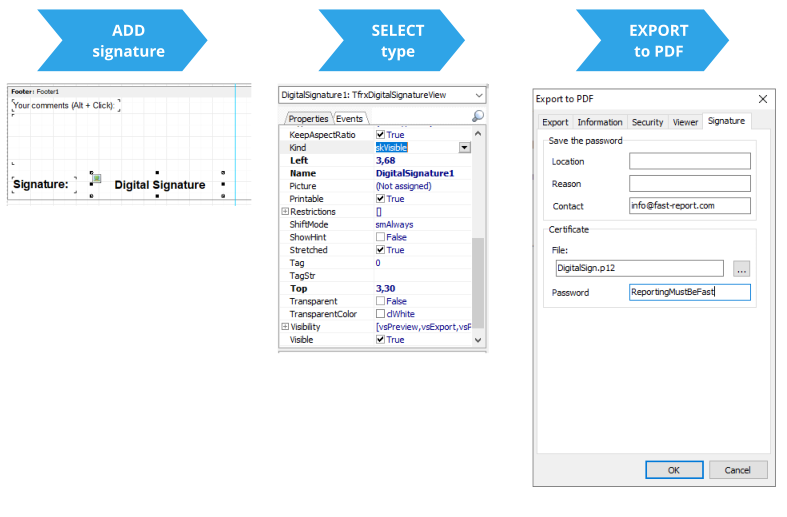
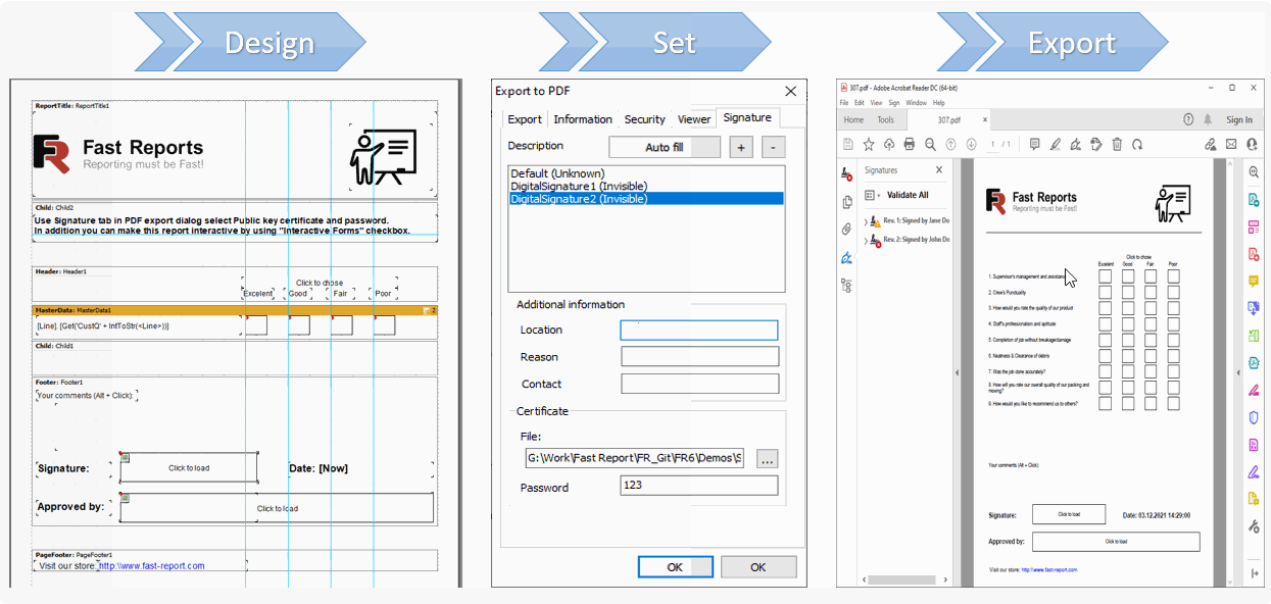
Full support for SVG vector graphics was implemented, along with the ability to add digital signatures to PDF documents. To expand reporting functionality, a new HTML View object was introduced, allowing for the embedding of web content visualization, as well as support for specialized medical barcodes, such as Two-Track Pharmacode.
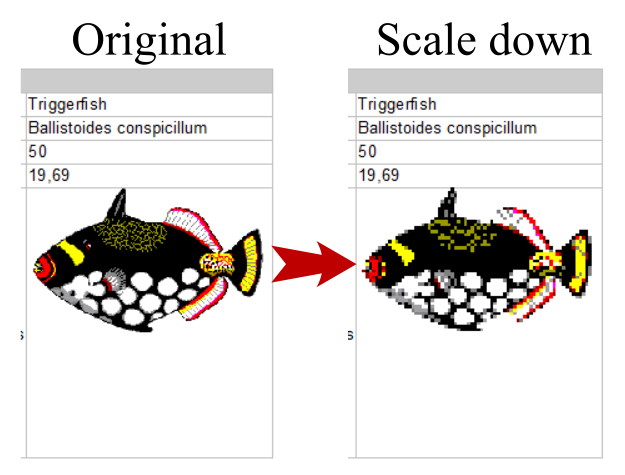
Significant optimizations were made to improve performance when working with large data volumes. Additionally, the ability to insert fragments of PDF documents into reports and to load data from external sources across all supported protocols was added.
Enhancing Security and Interactivity in 2022
The FastReport VCL 2022 version continued to develop in the direction of security and user interaction. Support for multiple digital signatures in PDF documents was implemented, along with the ability to fill interactive elements (such as ListBox and ComboBox) directly within the report.
To simplify design, layout control tools were included: automatic guides and highlighting of object intersections.
Key new features included integration with cloud services (Gmail, Outlook, Yandex Disk) and the introduction of a step-by-step script debugger. Support for modern technologies was maintained and expanded, including FireDAC, geospatial data, and high-quality printing on dot matrix printers.
2023 — A Unified Ecosystem and Digital Signatures
Continuing to build on previous achievements, the 2023 releases introduced automation and styling features. Stable support for Linux was added, paving the way for cross-platform development.
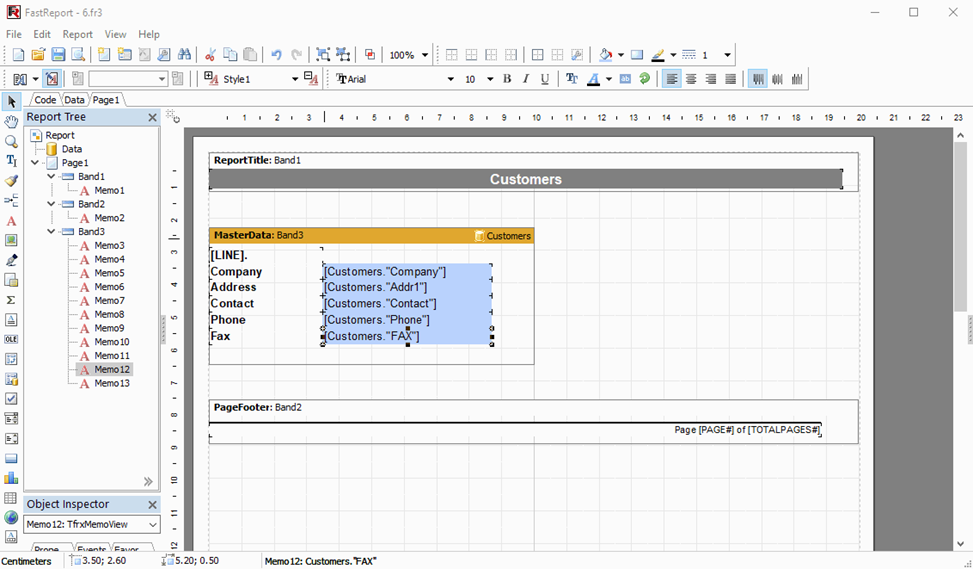
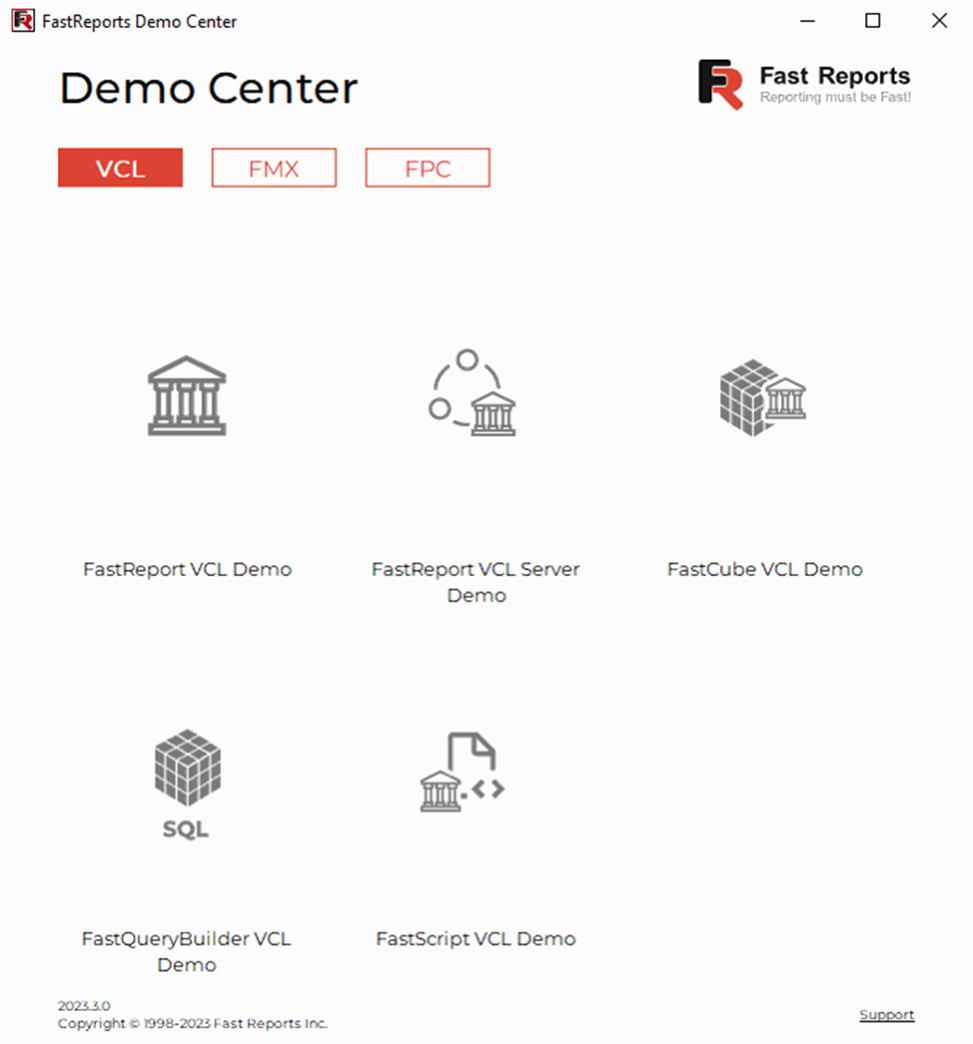
The FastReport VCL 2023 lineup transformed from a product into a unified ecosystem with a shared Core library. An innovative style sheet system was introduced, allowing for instant changes to the appearance of reports without the need for reconstruction.
Technological enhancements include support for advanced digital signatures (GOST, CADES), multi-threaded printing, and intelligent text scaling according to object sizes. A significant step was the discontinuation of support for Delphi 7, with support now available for Delphi versions starting from 2010. The focus has shifted to modern standards: integration with NextCloud, expansion of cryptographic functions, and optimization of PDF file sizes. These updates simplified work with current IDE versions, added new security tools, and increased the flexibility of report customization.

A Focus on Cross-Platform Development Starting in 2024
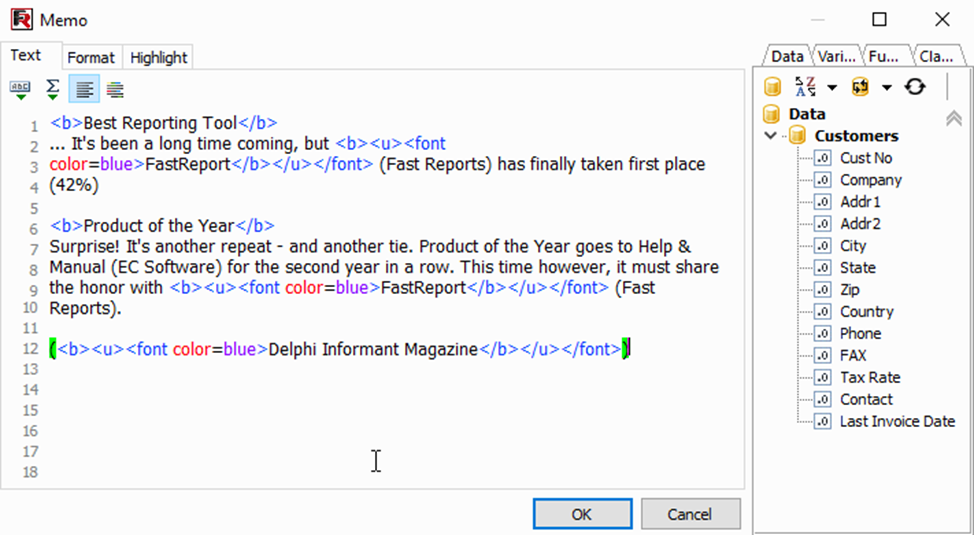
FastReport VCL 2024: A New Level of Development Convenience and Support for Modern Environments, Including Embarcadero RAD Studio 12. The updated text editor features syntax highlighting and automatic bracket matching. A tool for precise data field configuration without the need to connect to a database has been introduced. The technological stack expanded with support for S3 cloud storage (AWS) and a high-performance TfrTreeView component for handling large data volumes in both VCL and Lazarus. This component is successfully utilized within FastReport itself.
FastReport VCL 2025–2026: The product has become cross-platform and interactive. Key innovations include the implementation of RFID tags (TfrxDeviceCommand), a fully functional Online Designer, and the FastGrid library for professional data handling in Delphi and Lazarus. Versions from this period showcased an updated visual style, an advanced watermarking system, and a flexible editor for customizing watermarks. Users can now easily add protective inscriptions and images. With native support for TLS/XOAUTH in email transports and integration with the current version of RAD Studio 12.3–13, FastReport has provided developers with modern tools for creating secure business applications.


New Achievements
FastReport VCL continues to evolve, adapting to the needs of developers. Currently, the latest versions of FastReport are implementing support for semi-transparent images. Additionally, we are committed to maintaining and enhancing older components. For example, the number of language packs has significantly increased: FastReport now supports over 30 languages. Export functionality is becoming more robust: PDF export now supports multiple standards, which are added as they emerge.
FastReport promptly supports new versions of Delphi and Lazarus, typically within 1–2 months of a release, and sometimes even faster.
Conclusion
Over the past 25 years, FastReport VCL has evolved from merely a tool for generating reports into a comprehensive platform for developing complex, interactive, and secure reporting solutions within the Delphi and Lazarus ecosystems. Its evolution from a basic component with minimal functionality to a modern solution supporting vector graphics, cloud storage, digital signatures, and cross-platform development reflects not only technical progress but also a deep understanding of developers' needs. Each version has brought significant improvements—from the introduction of the XML format and scripting engine to the support of modern security standards and integration with cloud services—enabling the product to remain relevant in the rapidly changing technology landscape.
Today, FastReport VCL represents a mature, scalable, and flexible system capable of tackling tasks of any complexity—from simple print forms to analytical dashboards with geodata visualization and dynamic real-time reports. The shift to a subscription model and the unified Core architecture has facilitated the creation of a cohesive ecosystem, simplifying the maintenance and development of projects. Ongoing support for new versions of RAD Studio, prompt adoption of innovations, and attention to detail—from precise layout to multi-threaded printing—confirm that FastReport VCL remains a leader in its niche, setting standards for quality and performance for generations of developers.